
Coffee and Fitness: The Ultimate Guide—How to Maximize Performance and Avoid Fat Storage
Hey Team Members,
Whether it’s a black Americano before fasted cardio or a scoop of pre-workout before an afternoon lift, coffee and fitness have become inseparable. For those of us pursuing performance and physique improvements, caffeine is undoubtedly a powerful tool.

But how do you use it scientifically, instead of letting it become an obstacle to your progress? We will reveal caffeine’s scientific boundaries and show you how to avoid letting it store fat in your body.
1. The Caffeine Advantage: Activation and Mobilization (The Performance Edge)
Caffeine is an alkaloid that boosts your performance by activating your Central Nervous System (CNS) and your sympathetic nervous system.
-
Boosted Performance: Caffeine increases adrenaline release, making you feel more alert and focused. It can significantly boost your strength output and endurance during heavy lifting and high-intensity cardio.
-
Aids Fat Mobilization: Caffeine effectively signals fat cells to break down triglycerides and release Free Fatty Acids (FFAs) into the bloodstream. It acts like a signal light, telling your body: “Get ready to burn fat!”
2. The Scientific Boundary: The Biggest Mistake—Decomposition $\neq$ Oxidation (The Scientific Boundary)
This is the knowledge point every fitness enthusiast must internalize. Many incorrectly believe that simply drinking coffee will miraculously make fat disappear.
-
Decomposition (Mobilization) is Step One: Caffeine only helps you mobilize fat, moving it out of the “storage warehouse.”
-
Oxidation (Burning) is Step Two: Only through exercise can those mobilized FFAs enter the mitochondria and be ultimately oxidized and consumed.
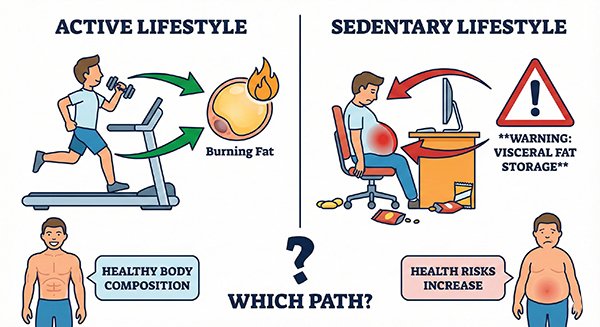
The Biggest Risk—Visceral Fat Storage: If you remain sedentary and use caffeine to fight work stress, the mobilized FFAs won’t be burned. In this high-stress (high cortisol) state, the fat is quickly re-stored, highly prone to accumulating in the abdominal cavity, leading to visceral fat and fatty liver disease.
Conclusion: Caffeine must be combined with exercise to yield fat loss effects. Otherwise, you are merely enduring the stress of CNS stimulation for no benefit.
3. The Recovery Trade-off: Sacrificing Sleep is the Greatest Loss (The Recovery Trade-off)
For fitness enthusiasts, sleep is the best supplement. However, caffeine’s biggest side effect is the disruption of recovery.
-
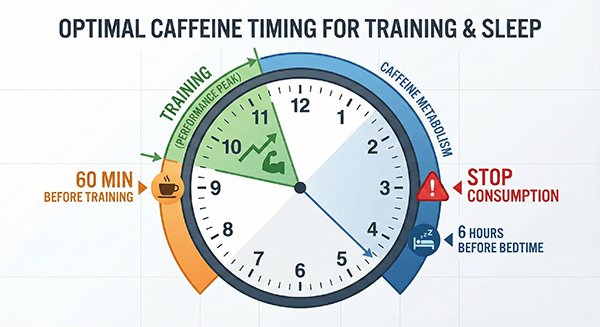
The 6-Hour Half-Life: Caffeine has a half-life of 6 hours. If consumed late in the afternoon, it continuously interferes with your CNS, making it difficult to enter crucial deep sleep and REM sleep cycles.
-
CNS Numbness: Long-term reliance on caffeine to fight fatigue leads to a vicious cycle: Fatigue –> Stimulation –> Poor Recovery –> Greater Fatigue. Eventually, your CNS becomes numb, performance plateaus, and injury risk increases.
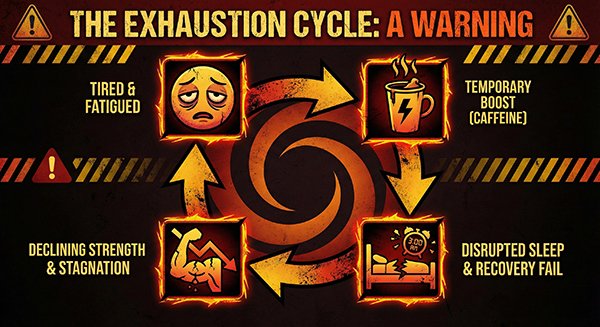
Remember: Caffeine masks fatigue; it cannot solve fatigue.
4. Coffee and Fitness: The Strategic Playbook (The Strategic Playbook)
To maximize caffeine’s benefits and protect your health, follow these rules:
A. Optimal Timing
-
30–60 Minutes Before Training: Caffeine reaches peak concentration about one hour after consumption, making this the ideal window for maximizing exercise performance.
-
Sleep Isolation: Stop all caffeine intake at least 6 hours before bed. If you are sensitive, extend this to 10–12 hours.
-
Fasted Cardio: If opting for fasted cardio, drink black coffee the moment you wake up, then proceed with your grooming routine, ensuring the caffeine has begun to take effect when you start exercising.
B. Dosage and Safety
-
Daily Limit: We recommend keeping your total daily caffeine intake under 400 mg. Be sure to account for hidden doses in milk tea, chocolate, energy drinks, and pre-workouts.
-
Gut Safety: If drinking coffee on an empty stomach causes discomfort or diarrhea, stop. This often indicates pre-existing stomach issues, as caffeine stimulates acid secretion.
-
Alternative Activation: If you need to train in the evening but want to protect your sleep, try a 15-minute low-intensity warm-up or listening to high-energy music to activate your CNS, avoiding chemical stimulants.
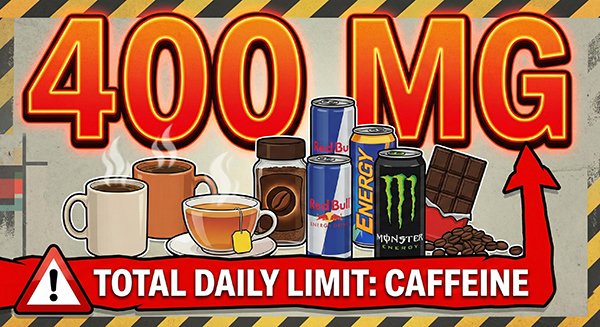
Final Summary: Caffeine is a powerful ally on your fitness journey, but it must not become an excuse to sacrifice recovery. Use it smartly to make it part of a positive cycle.
Stay healthy, train smart, The [TrustyRep] Crew