Mastering the Calorie Deficit: The 75% Secret to Fat Loss (Why BMR is King)
Hey Team Members,
Do you believe that fat loss only happens when you’re pushing through an intense workout, sweating profusely on the treadmill?
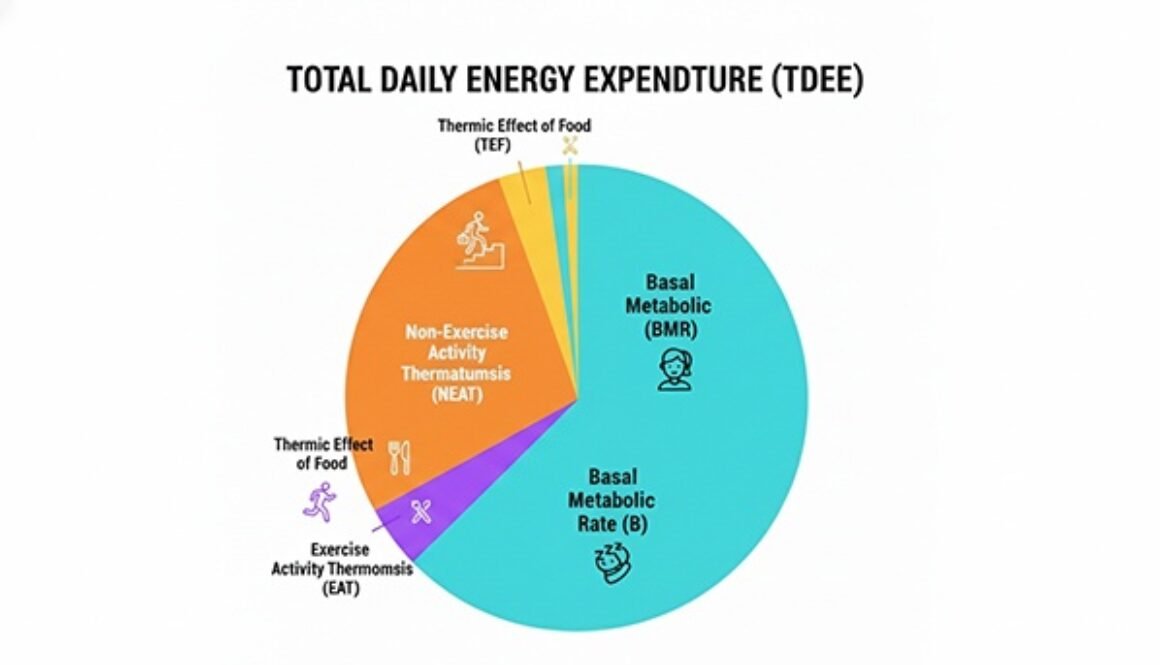
That’s a common misconception. Today, we’re revealing the staggering “75% Secret”: the vast majority of your daily calorie expenditure occurs when you are completely at rest. Understanding this mechanism is the first essential step to achieving scientific and sustainable fat loss by creating a Calorie Deficit.
1. Revealing the 75%: The True Battleground is Basal Metabolic Rate (BMR)
-
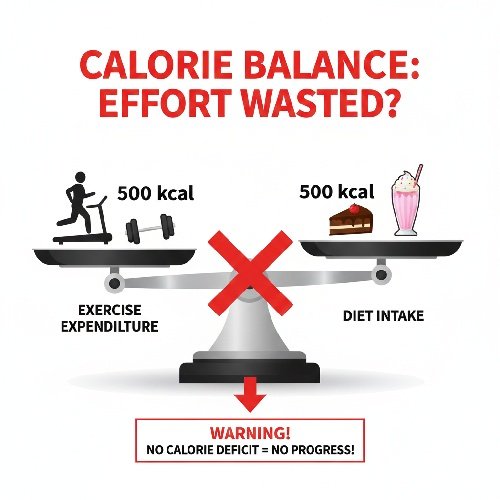
The Core Premise: The only unit that matters in fat loss is the Calorie Deficit (intake < expenditure). If you’re not in a deficit, you won’t lose fat.
-
The 75% Secret: A massive 60% to 75% of your Total Daily Energy Expenditure (TDEE) comes from your Basal Metabolic Rate (BMR)—the energy your body consumes just to keep your lights on (breathing, circulation, organ function).
How to Crank Up Your “Engine Power”
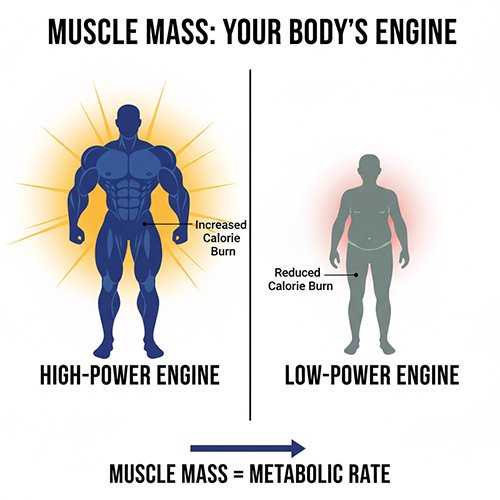
To effectively increase your BMR, you must increase the factor that influences it most: Lean Body Mass (LBM), or muscle mass.
-
The Strategy: Resistance Training. Building LBM turns your body into a “High-Powered Engine,” raising your BMR. This increases your resting calorie burn and gives you a much wider dietary calorie range for maintenance, making it significantly easier to sustain a Calorie Deficit.
-
The Warning: Extreme calorie restriction and excessive cardio without resistance training will cause you to lose LBM, lowering your BMR.
2. Deficit Control: Warning Against the “Hidden Calorie” Traps
No matter how high your BMR is, if your intake is uncontrolled, your fat loss efforts will fail. To successfully achieve a Calorie Deficit, you must eliminate the “calorie black holes” in your diet.
-
The Single Unit: Calories. Your body does not care about the volume or weight of food; it only cares about the caloric density.
-
The Time Cost Trap: It takes one hour of running to burn 500 calories, but it takes about two minutes to eat those 500 calories back.
-
Hidden Calorie Killers: Beverages, snacks, and desserts are often the highest caloric density foods.
3. Optimizing Expenditure: Leveraging the Other 25% for Double Efficiency
In addition to BMR, you can efficiently widen your Calorie Deficit using two actionable strategies:
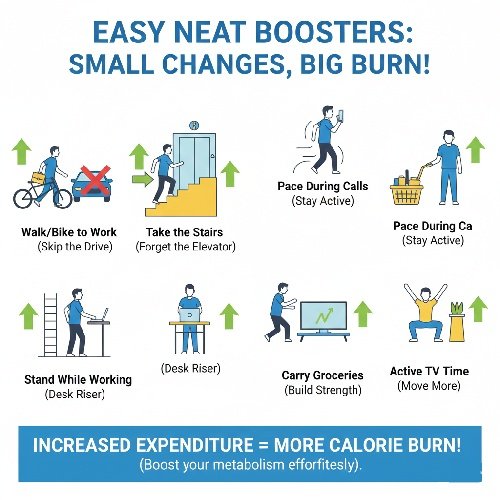
A. Increase Non-Exercise Activity Thermogenesis (NEAT)
This makes up 15% to 30% of your total expenditure.
-
Strategy: Choose the more costly activity. Swap driving for walking; take the stairs instead of the elevator. These small, consistent changes significantly increase your daily burn.
B. Utilize the Thermic Effect of Food (TEF)
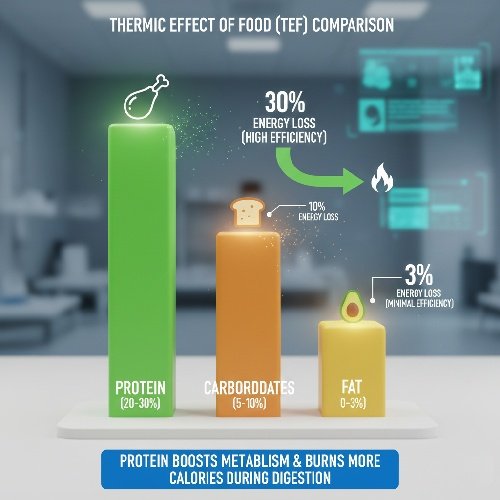
This accounts for about 10% of your total expenditure—the energy needed to digest, absorb, and metabolize food.
-
The Protein Advantage: Protein has the highest TEF, at approximately 30%. Your body expends 30 calories just to process 100 calories of protein.
-
Strategy: Ensure adequate protein intake (1.2 – 1.5g/kg body weight for those training). This simultaneously preserves LBM and uses the high TEF to widen your Calorie Deficit.
4. Final Warning: The Metabolic Safety Rules
-
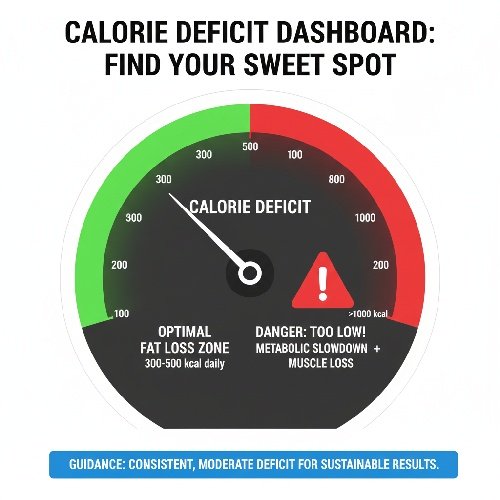
Scientific Deficit Range: We recommend keeping your daily Calorie Deficit between 300 to 500 Calories.
-
The Metabolic Compensation Risk: If your deficit exceeds 1000 calories for a prolonged period, your body will trigger its “survival code” and enter Metabolic Compensation. Your brain will forcibly lower your BMR and activity expenditure, causing your fat loss to stall.
Final Summary: Sustainable fat loss is not about hours of punishing exercise; it is about the precise management of the Calorie Deficit. Understand that 75% of your battle is won by building a stronger engine (BMR), managing your intake, and staying consistent with the 300-500 calorie rule.